The United Kingdom is currently at the forefront of a seismic shift in the global energy landscape. As the first major economy to pass laws to end its contribution to global warming by 2050, the UK's "Net Zero" strategy relies heavily on the rapid expansion of domestic battery manufacturing factories. The British government, through the Faraday Battery Challenge and the Automotive Transformation Fund, is actively nurturing a local ecosystem capable of supporting the transition from internal combustion engines (ICE) to electric vehicles (EVs).
Currently, the UK battery market is characterized by a surge in "Gigafactory" developments. From the established AESC plant in Sunderland supporting Nissan to the massive Agratas (Tata Group) project in Somerset, the demand for sophisticated battery manufacturers has never been higher. These facilities require more than just assembly lines; they need end-to-end intelligent manufacturing solutions that incorporate NMP (N-Methyl-2-pyrrolidone) recovery, high-precision coating, and automated cell-to-pack technologies.
Strengthening the UK supply chain by reducing reliance on imported cells and fostering domestic chemical processing and recycling.
Expanding the UK grid capacity through large-scale Battery Energy Storage Systems to manage renewable energy volatility.
Implementing NMP recovery and battery second-life applications to meet stringent UK environmental regulations.
UK research institutions like the University of Oxford and the Faraday Institution are leading the charge in solid-state battery development. Battery manufacturers for the UK market must now prepare for the transition from liquid electrolytes to solid-state, which promises higher energy density and improved safety for the next generation of Jaguar Land Rover and McLaren vehicles.
Environmental standards in the UK are among the highest in the world. The recovery of NMP (N-Methyl-2-pyrrolidone) during the electrode coating process is no longer optional—it is a regulatory mandate. Pengjin Technology’s advanced NMP distillation and recycling systems are designed to meet these specific UK HSE (Health and Safety Executive) and EA (Environment Agency) requirements, ensuring zero-emission manufacturing.
While high-performance cars in the UK often utilize NMC (Nickel Manganese Cobalt) chemistries, the commercial sector—including London’s iconic red buses and delivery vans—is shifting toward LFP (Lithium Iron Phosphate). LFP offers longer cycle life and lower costs, making it ideal for the heavy-duty cycles required by UK logistics companies. Our battery manufacturing factories provide flexible production lines that can switch between these chemistries with minimal downtime.
Innovative tech services for customer success and employee fulfillment
Leading new energy intelligent manufacturing
Driving the development of new energy circular economy
Honesty, pragmatism, pioneering spirit, pursuit of excellence
Supporting the UK's goal to produce over 100GWh of battery capacity by 2030 to sustain the domestic car industry.
Providing integrated containerized battery solutions for UK solar and wind farms in regions like Scotland and East Anglia.
Developing battery packs for electric ferries and short-sea shipping to decarbonize British ports and waterways.
High-precision manufacturing lines for lightweight battery modules used in the UK's growing electric vertical take-off and landing (eVTOL) sector.
With the rapid development of the lithium battery industry, the efficient use of resources and the steady improvement of efficiency are the top priority of enterprise operation and development. Pengjin Technology adheres to the corporate mission of "driving the development of new energy recycling economy with technology" and provides more perfect NMP solutions for the majority of lithium battery manufacturers and NMP manufacturers. On the road of circular economy, Pengjin team will take excellent steps, keep pace with time; work together for a win-win situation, and create a more efficient tomorrow.
Pengjin team will be committed to NMP recycling, NMP circular economy and other resource recycling economy, high-tech development economy, and take solid steps to promote the high-quality development of new energy and realize the green, circular and low-carbon development of industries.


As the United Kingdom accelerates its journey toward becoming a clean energy superpower, the role of experienced battery manufacturing factories becomes paramount. The integration of advanced automation, AI-driven quality control, and sustainable resource management is not just a competitive advantage—it is the foundation of the modern industrial strategy. Pengjin Technology is committed to providing the British market with the tools necessary to lead this revolution. From the initial layout design of a new cell production facility to the optimization of NMP recovery systems in existing plants, our expertise ensures that UK manufacturers can achieve peak efficiency while adhering to the highest environmental standards.
The synergy between Chinese manufacturing prowess and British engineering innovation creates a powerful force for global change. By choosing a partner that understands the specific nuances of the UK battery market—including the regulatory landscape, the shift toward LFP and solid-state chemistries, and the critical importance of local supply chain resilience—companies can ensure their long-term success in the post-carbon era. We invite UK-based developers, automotive OEMs, and energy providers to explore our comprehensive range of production solutions and join us in building a more efficient, sustainable tomorrow.
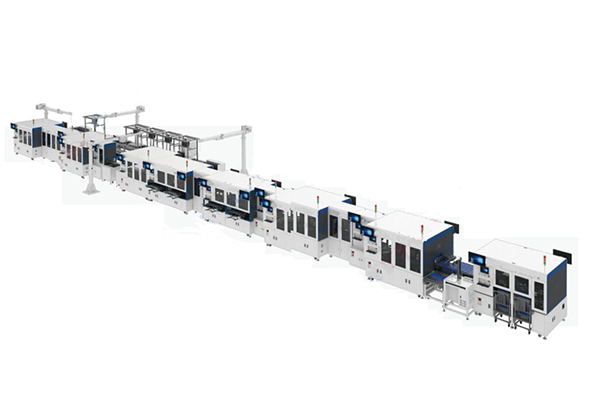
Prismatic Battery Module PACK Automatic Production Line
Cylindrical battery module pack automatic line
Cylindrical Battery Insertion Machine
Cylindrical Cell Manufacturing Planning - Layout Design
Pouch Battery Module PACK Automatic Production Line
Pouch-type Cell Manufacturing Planning - Layout Design
UK Integrated Containerized Battery PACK Production Line
Container Integrated Production Line Battery PACK