


Battery PACK Technology


0102030405060708
What Is an Automated Lithium Battery PACK Line and Which Industries Must Use It?
2026-04-14
What Is an Automated Lithium Battery PACK Line?
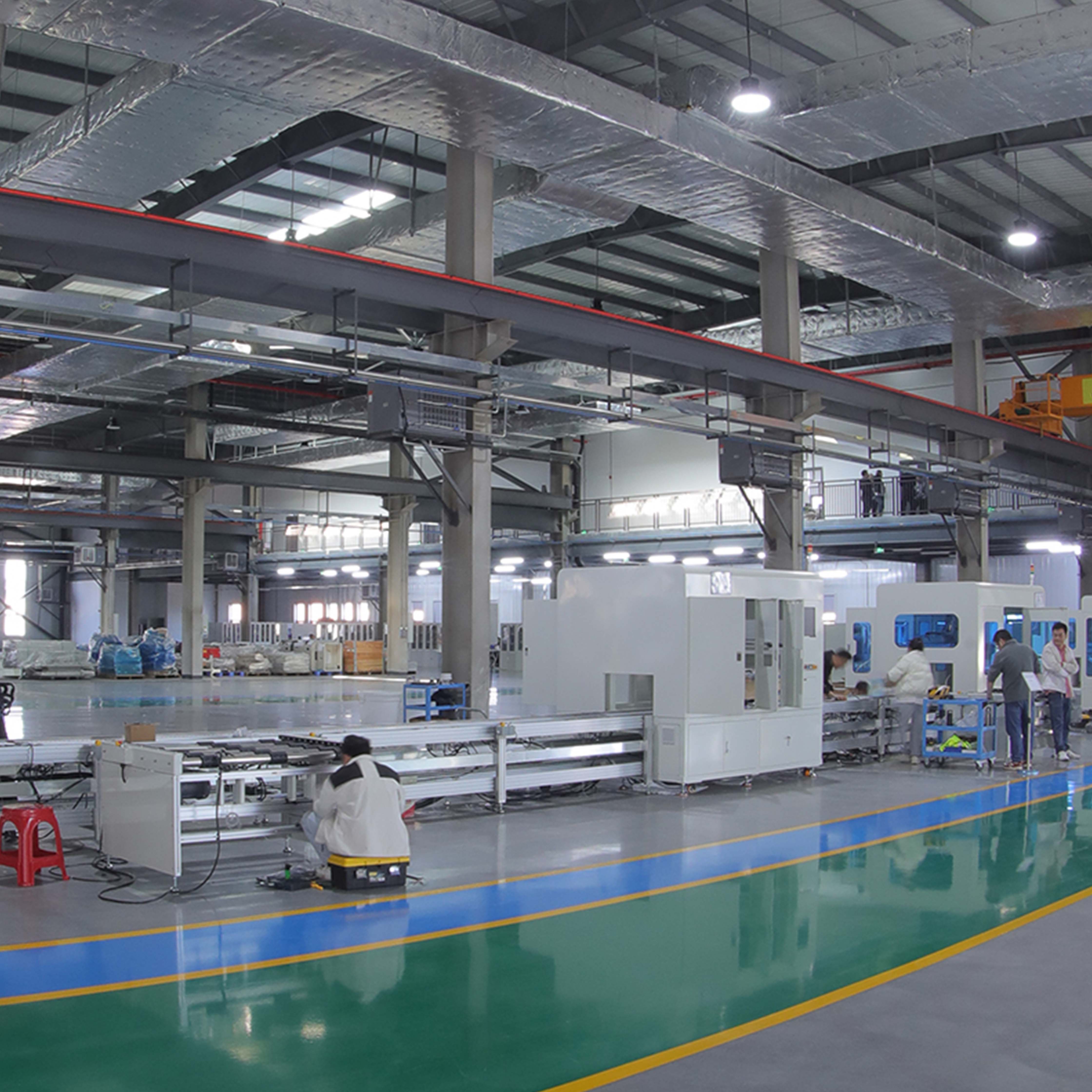
An automated lithium battery PACK line is a production system that assembles battery cells—cylindrical (18650, 21700, 32700), prismatic, or pouch—into complete battery packs. Key processes include cell sorting, polarity checking, laser welding, insulation testing, BMS integration, module assembly, casing, and final testing.
Automation replaces manual work with robotics, vision systems, and PLC control, ensuring high consistency, safety, and full traceability.
Why Is It Critical? Key Industry Pain Points
Without automation, manufacturers face:
- High defect rates (10–15%) from manual errors
- Safety risks such as short circuits and thermal issues
- Low output (50–100 packs/day)
- Lack of traceability for quality control
- Difficulty passing certifications (ISO, UL, CE)
- Automated PACK lines reduce defects to below 2%, increase output to 300–500 packs per shift, and enable full production tracking.
Who Needs an Automated PACK Line?
Automation becomes essential for:
- EV manufacturers requiring high precision and volume
- Energy storage providers needing stable large-capacity packs
- Power tool & e-mobility brands with flexible product lines
- Companies upgrading to lithium batteries
- Contract manufacturers handling multiple formats
- If production exceeds 500 packs per month or requires certifications like IATF 16949, automation is necessary.
Pengjin Automated PACK Line Solutions
Guangdong Pengjin provides flexible and scalable PACK line solutions:
- Compatible with cylindrical, prismatic, and pouch cells
- Energy-efficient design reducing power consumption by 15–20%
- Modular architecture from semi-auto to full automation
- Integrated MES for full traceability
- A real ESS manufacturer improved yield from 88% to 98.2% and reduced labor costs by 60% after adopting a Pengjin solution.
Conclusion
Automated lithium battery PACK lines are essential for safe, efficient, and scalable production. For growing manufacturers, investing in automation is key to improving quality, meeting standards, and staying competitive.
