Hungary: The Heart of Europe’s Electric Vehicle Battery Manufacturing
Hungary has emerged as the definitive powerhouse of electric vehicle (EV) battery production within the European Union. Driven by a forward-looking industrial strategy and the "Eastern Opening" policy, the Hungarian government has successfully attracted multi-billion euro investments from global battery giants. Leading battery manufacturers such as CATL (Contemporary Amperex Technology Co. Limited) in Debrecen, Samsung SDI in Göd, SK On in Komárom and Iváncsa, and EVE Power have established gigafactories that are reshaping the local economy.
This rapid mobilization of production capacity has positioned Hungary to become the second-largest battery manufacturer in Europe. However, operating at this scale requires a robust, highly sophisticated supply chain. Among the various stages of lithium-ion battery manufacturing, the electrode fabrication process—specifically electrode coating, rolling (calendering), and slitting—is critical to achieving high cell performance, safety, and longevity.
As a leading global supplier of new energy intelligent equipment, Guangdong Penjin Intelligent Equipment Co., LTD. (Pengjin Technology) offers localized, state-of-the-art solutions tailored to the stringent production demands of Hungary's battery factories. Our advanced machinery is specifically engineered to comply with European safety standards (CE certification), ensuring seamless integration into automated, high-output production lines.
The Science of Electrode Rolling & Calendering in Battery Production
Electrode rolling, or calendering, is the process of compressing the active material slurry coated on copper or aluminum current collectors. This step is crucial because it directly influences key battery parameters:
1. Compaction Density: Calendering increases the density of the active material, which directly translates to a higher volumetric energy density for the finished battery cell. This is vital for electric vehicles, where maximizing range within a limited physical space is paramount.
2. Porosity Control: While high density is desirable, the electrode must maintain an optimal level of porosity. This ensures that the liquid electrolyte can fully wet the electrode, facilitating rapid lithium-ion transport during charging and discharging. If the electrode is compressed too tightly, the ion pathways are blocked, resulting in poor rate capability and potential lithium plating.
3. Adhesion and Conductivity: The rolling process enhances the physical contact between the active material particles and the current collector foil. This minimizes internal resistance, improves electron transport, and prevents the active material from delaminating during subsequent winding or folding processes.
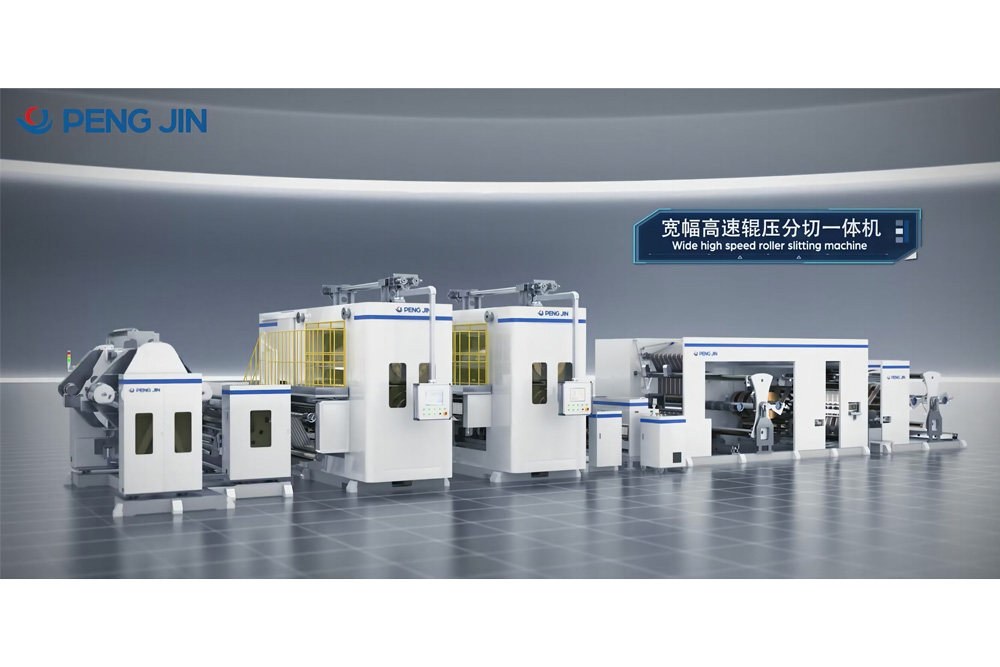
Our Rolling-Slitting Integrated Machine and Dry Electrode Diaphragm Calender systems utilize advanced hydraulic roll-bending compensation and ultra-precise gap control (down to sub-micron levels) to ensure uniform thickness across the entire width of the foil, eliminating edge waves and wrinkles.
The Green Revolution: Dry Electrode Technology in Hungary
The European Union's strict environmental regulations, including the new EU Battery Regulation, demand a continuous reduction in the carbon footprint of battery manufacturing. Traditional wet electrode coating methods rely heavily on toxic organic solvents like N-Methyl-2-pyrrolidone (NMP). The processing of NMP requires massive drying ovens, extensive energy consumption, and complex recovery systems.
To address these environmental and economic challenges, the industry is transitioning toward Dry Electrode Technology. In this solvent-free process, active materials are mixed with a fibrillizable binder (such as PTFE) in a dry state. High shear forces are applied to form a self-supporting electrode film, which is then directly laminated onto the current collector foil using a high-precision calender.
By eliminating NMP solvents and drying ovens, dry electrode manufacturing reduces energy consumption by up to 50% and slashes the required factory footprint. Pengjin Technology’s Dry Electrode Diaphragm Calender is designed to meet this next-generation manufacturing standard, providing Hungarian factories with a sustainable, cost-effective path to producing high-performance battery cells.